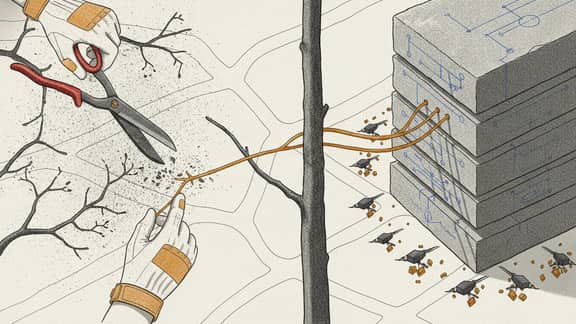
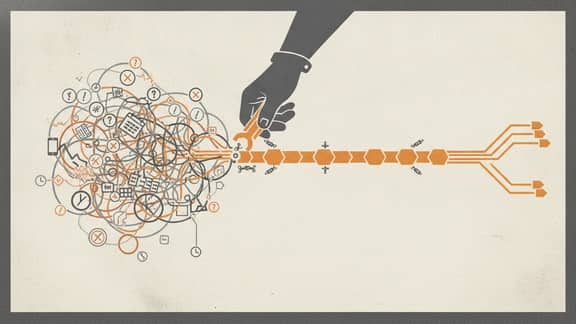
The best Asana alternatives usually come into focus when a team wants to keep the useful workflow outcome but no longer wants the full product shape around the part of the work that matters most.
That is why many Asana switching decisions are really questions about project coordination fit, not just feature comparison.
For broader category context, Planisware's public summary of the 2025 Gartner Magic Quadrant for Adaptive Project Management and Reporting is one useful outside reference point.
The real question is usually smaller than “replace Asana”
A team searching for Asana alternatives is not always trying to remove every project or task workflow from Asana.
Often the real frustration is focused:
- a project coordination surface that feels too broad for one repeated job
- a planning workflow with more admin overhead than the team now tolerates
- a request, approval, or reporting loop that needs clearer ownership than a broad work-management product naturally gives it
That is why “alternative to Asana” often hides a workflow-boundary question.
What better than Asana usually means
“Better than Asana” usually means one of five things:
- less admin and less board maintenance
- clearer ownership of the next action
- a smaller operational surface around one repeated workflow
- a better fit for occasional users who do not live in the tool all day
- stronger reporting or approval structure where the work demands it
That is more useful than a generic feature-score comparison.
Best Asana alternatives
The best Asana alternatives depend on what part of Asana the team is really trying to replace.
For many teams, the shortlist starts with Monday.com, ClickUp, Trello, Smartsheet, Wrike, and sometimes Basecamp when the team wants a lighter operating model.
- Monday.com is a common Asana competitor when teams still want visual project coordination but prefer a more flexible operational layer.
- ClickUp fits buyers that still want an all-in-one suite but expect deeper customization and denser project views.
- Trello fits teams whose real need is still lightweight board-based coordination.
- Smartsheet is stronger when the work is operational, tabular, and reporting-heavy.
- Wrike works better when cross-functional planning and enterprise reporting matter more than a lighter SMB-friendly surface.
- Basecamp fits teams that want a simpler communication-and-project shape with fewer moving parts.
Apps like Asana
When someone searches for apps like Asana, they are usually asking for one of three things:
- another collaborative project-management product
- a lighter task-and-board tool
- a focused workflow alternative that does not require a full work-management suite
That is why apps like Asana can mean Monday.com, ClickUp, Trello, Wrike, Smartsheet, or a custom workflow when the real problem is not category breadth but workflow specificity.
Asana competitors
The strongest Asana competitors are the ones that compete for the exact coordination job the team still runs.
If the team is managing broader work planning, Monday.com, ClickUp, Wrike, and Smartsheet are stronger competitors.
If the team really wants a simpler board workflow, Trello is the closer competitor.
If the team is only trying to automate a reporting, handoff, or approval surface around the project system, the better competitor may not be a project tool at all.
Free Asana alternatives and open-source Asana alternatives
Free Asana alternatives matter most when the team is smaller, budget-sensitive, or still testing what process shape it needs.
Trello, ClickUp, and some open-source task tools often come up first in that conversation because they lower the operating surface quickly.
Open-source Asana alternatives are a different decision. They give more control, but they also shift more setup, maintenance, and governance burden onto the team.
Similar tools to Asana
Similar tools to Asana usually fall into two groups.
The first group includes full project and work-management products such as Monday.com, ClickUp, Wrike, and Smartsheet.
The second group includes lighter collaboration tools such as Trello or Basecamp.
Which group matters depends on whether the team is replacing a broad coordination system or just looking for less friction around one repeated workflow.
What teams are usually trying to escape
They are usually trying to escape admin overhead, board sprawl, and a product surface that feels heavier than the work that still matters.
That is a strong signal that the workflow should lead the decision.
When to keep Asana
Keep Asana when the team genuinely uses it as the shared planning surface for cross-functional work and the main pain is local process cleanup rather than category mismatch.
The presence of some friction does not automatically make Asana the wrong product.
When to replace only the focused workflow
Replace only the focused workflow when Asana is still acceptable as the broader coordination record, but one adjacent process has become too awkward.
Common examples include:
- approval routing
- intake and request handling
- recurring status reporting
- simple handoff workflows for occasional users
That boundary is usually safer than a full platform migration.
Decision checklist
Use this checklist before replacing Asana:
- Are you replacing the whole project tool or just one workflow inside it?
- Do casual users struggle more than power users?
- Is the team really asking for a lighter product, or for clearer ownership and state?
- Would a focused workflow replacement solve the pain faster than another suite migration?
Keep the coordination job in focus
The safer move is to identify the exact coordination surface that still matters and replace that, not to turn the decision into a broader migration by default.
Where SwarmCraft fits
SwarmCraft fits when the team wants a focused workflow around projects, approvals, or handoffs than the current product shape comfortably supports.
That is where a custom workflow becomes more practical than another general platform comparison.
If you are still comparing category options, continue with Best project management software. If the practical pain is board ownership and task movement, continue with Project Kanban board workflow: how to automate it.
Choose a discovery route
Have one bounded workflow, or need deeper evidence and record-ownership reasoning first? Choose Fast Start or Deep Discovery based on the work and risk involved.