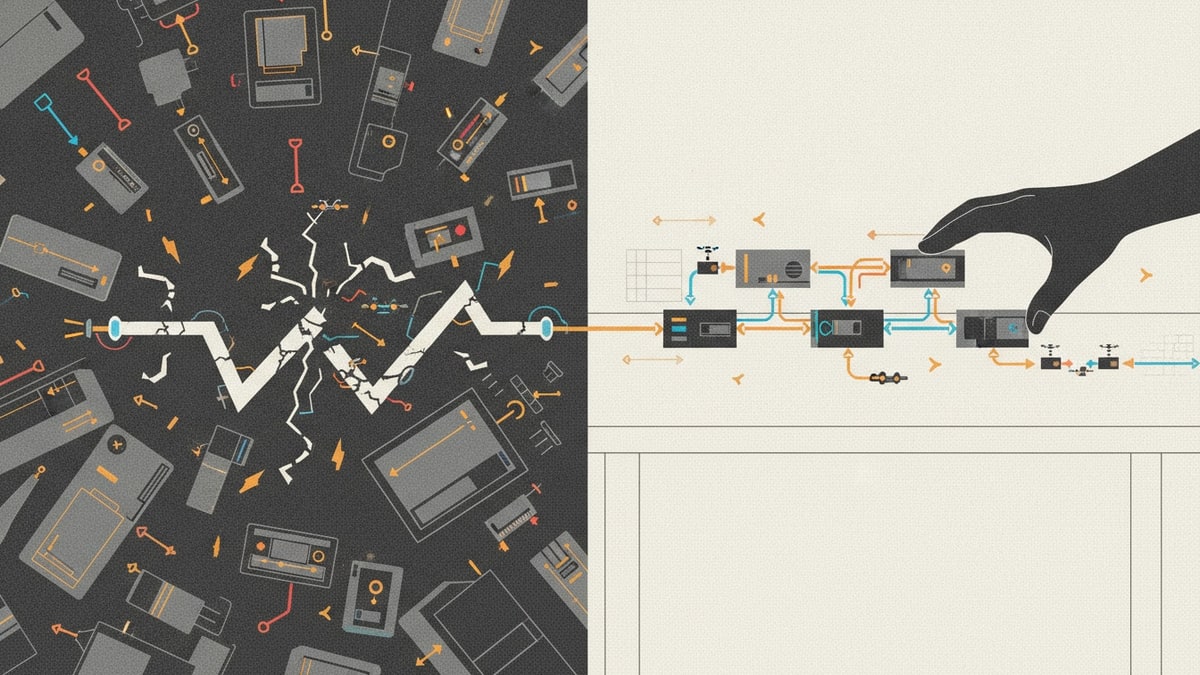
Low-code tool sprawl used to mean too many app builders, automation tools, forms, portals, and internal databases.
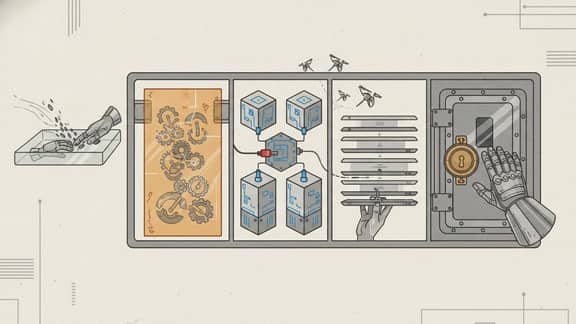
Now the category is moving again. Platforms are no longer only selling low-code app development. They are selling governed ways to build, run, and manage apps and AI agents in one place.
OutSystems is the cleanest example of the shift. Its current positioning describes an AI development platform for building, running, and governing apps and AI agents, with Mentor and Agent Workbench carrying the agentic development story. That matters because the pitch is no longer just "build apps faster." The pitch is "bring your AI apps, agents, workflows, governance, and lifecycle into one platform."
That may be the right answer for some enterprises. It is also exactly how a focused workflow problem can become another platform commitment.
Why it happens
Teams reach for low-code because the workflow really is too specific for off-the-shelf software.
Then the request changes shape. A team does not just want a form or a dashboard. It wants an AI chat that interviews a user, extracts answers, applies a rubric, flags risk, and produces a report.
That sounds like an agent platform problem. Sometimes it is. Often, it is still just one workflow:
- chat intake
- structured data capture
- scoring or classification
- human review
- report generation
- Slack or email handoff
- audit history
The danger is buying the platform before proving that this focused workflow needs one.
The hidden cost
The cost is not only licensing.
It is governance meetings, platform administration, citizen-builder training, reusable component libraries, app lifecycle rules, integration ownership, data-model drift, and the growing uncertainty about which tool owns the business process.
Low-code sprawl becomes harder to see once AI enters the pitch. Every tool looks strategic. Every prototype looks like the beginning of an agent portfolio. Every team wants a chat surface. The result can be the same old SaaS sprawl with a newer vocabulary.
Why the agent-platform pitch is tempting
The pitch solves a real fear: teams do not want AI outputs spreading across the company without control.
That fear is rational. AI workflows need review, data boundaries, audit trails, and ownership. But those controls do not always require a broad enterprise platform. A focused owned app can implement the controls the first workflow actually needs:
| Risk | Focused workflow control |
|---|---|
| Free-form AI answers | Structured answer extraction |
| Inconsistent recommendations | Owned rubric and deterministic scoring |
| Unsafe report delivery | Human review before finalization |
| Lost context | Assessment history and report versions |
| Invisible handoffs | Slack or email delivery audit |
| Tool sprawl | One owned app for one repeated workflow |
That is the operator-builder move: keep the control, avoid unnecessary platform gravity.
Why software bloat survives rationalisation efforts
Low-code clean-up fails when teams rationalise tools before they focus the workflow.
If the organisation cannot say which workflow it is replacing, every platform looks important. One team needs forms. Another needs approvals. Another needs dashboards. Another wants AI chat. Soon the business has multiple builder tools, multiple automation layers, and no single owner for the process.
The same thing can happen with agent tools. A platform may be powerful, but power does not remove the need to define the workflow.
The better framing
The better move is to make the workflow smaller before making the platform broader.
In practice, that means treating the AI agent idea as an AI assessment report workflow:
- Define one assessment type.
- Define the questions the chat must ask.
- Define the fields the answer must produce.
- Define the rubric.
- Define which results require review.
- Define the report template.
- Define the delivery and history requirements.
Once those things are clear, the team can build an owned workflow app and decide later whether it needs platform-grade governance.
When low-code or an agent platform is enough
Low-code and agent platforms are still useful when the organisation genuinely needs a portfolio approach: many apps, many teams, many data sources, formal governance, security review, release management, and enterprise support.
The custom path becomes more interesting when the team mainly needs one repeated AI-enabled workflow. In that case, the platform may be solving a larger problem than the team has.
That distinction matters for SaaS costs. The operator-builder does not need to reject low-code on principle. They need to stop renting broad platform capability when the business value lives in one workflow they can own.
What to do next
Start with workflow ownership around one buildable process, not with a search for the next all-purpose app and agent platform.
If the workflow is an AI assessment report, write the rubric, report template, review gate, and delivery path first. Then build the smallest internal app that proves the loop.
Once the team owns the first version, future development becomes optional and incremental: more assessment types, configurable questions, role-specific review queues, richer analytics, deeper integrations, or a better chat experience.
If you are still comparing builder categories, continue with Best low-code platforms. If the next step is implementation, continue with AI assessment report workflow: how to automate it. If the platform question is specifically about OutSystems, continue with OutSystems competitors.