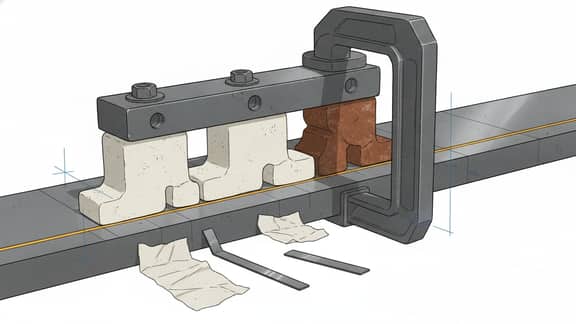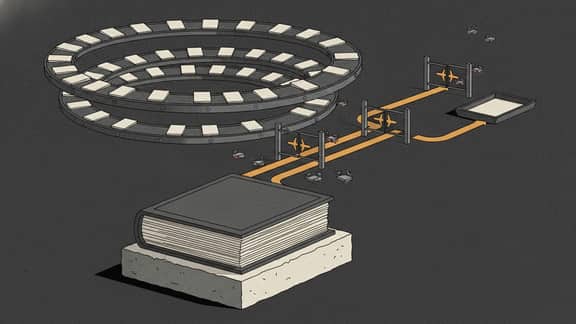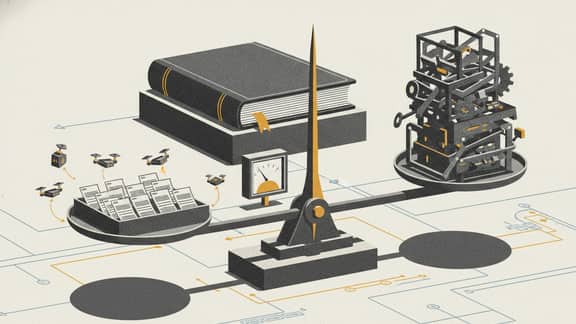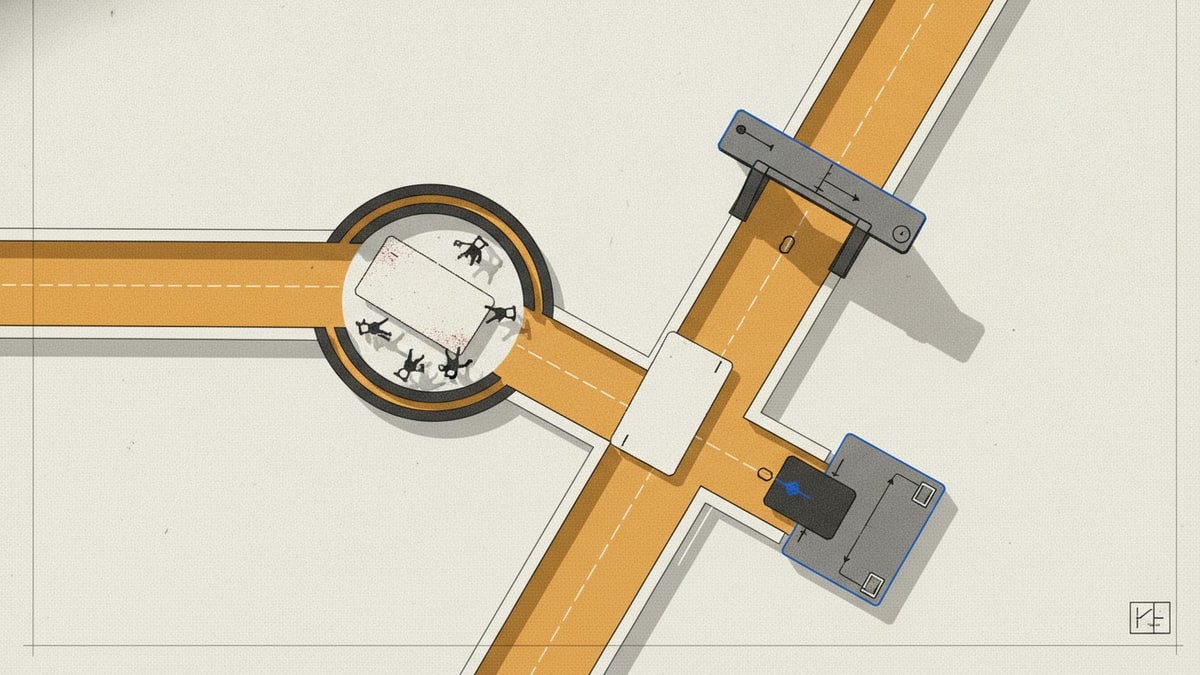
A manager approves A$120,000 of annual maintenance. The customer adds quarterly inspections, asks for a faster response and agrees to A$132,000. Which agreement has the business actually authorised—and what happens after it is signed?
For week 21 of our case-study series, we built a contract approval workflow for fictional Banksia Maintenance Services. The broader question was: what would it take to replace the contract system this business actually uses?
Banksia’s desk owns the register, document versions, approvals, executed records, obligations and renewal decisions. Specialist signing stays separate. Juro is the illustrative incumbent, not a product we connected to or a customer account we migrated.

SwarmCraft structured a 72-task project implemented with Codex, followed by repairs and consolidated verification. The screenshots show authenticated views of persisted synthetic records. They demonstrate the resulting state; the scenario runner performs lifecycle steps through the application’s domain services. This is not yet a complete browser-driven contract authoring experience.
Why own the contract operation?
Juro already documents reapproval when approved text or smartfields change. It also offers artificial intelligence (AI) extraction, drafting and review through its custom-priced plans. Neither reapproval nor AI is a missing-feature argument for replacing it.
The ownership question is whether one coherent operating home would fit Banksia better: who agreed which terms, which copy was signed, who must act next and what must survive a migration or recovery.
A contract approval process that ends at “approved” leaves much of that responsibility elsewhere. A signed file may still depend on a personal calendar for its notice deadline and an email thread for its service obligations. Our contract-stack analysis explores that duplication.
For this experiment, the replacement boundary includes those continuing records. Accounting, customer identity and specialist signing remain outside it. We did not build a general legal drafting suite or establish that every contract platform capability should be recreated.
Begin with the agreements already in force
Banksia starts with two executed agreements: Harbour Facilities at A$96,000 annually and Ridgeway Estates at A$60,000. All amounts are Australian dollars excluding goods and services tax (GST).
Harbour still owes insurance evidence. Ridgeway has a notice deadline approaching. Importing the documents without their owners and next actions would lose the operation while preserving the files.

The migration administrator activates the reconciled batch. An incorrect total is rejected first; replaying the valid batch creates no duplicates. The retained records include source identifiers and document evidence. The synthetic source archive becomes read-only, and Banksia’s desk becomes the active record owner.
This uses an invented import format. A real transition would require mapping an actual Juro export, agreeing opening records and preventing both systems from authorising changes during cutover. The demonstration does not establish export compatibility.
The contract approval workflow must follow the exact version
Cedar Commercial’s first proposal covers monthly maintenance at three sites, with a response within two business days. A separate commercial manager approves its A$120,000 annual value.
Revision two adds quarterly emergency-light inspections and changes the response to the next business day. Annual value rises by A$12,000 to A$132,000. Keeping the earlier approval attached to the changed package would conceal a new commitment.

The previous approval remains in history, but cannot authorise sending the revised package. The commercial manager must make a fresh decision. Approval binds the version and package rather than a generic green status on the contract.
The contract approval workflow steps separate preparation, authority and evidence:
- The coordinator prepares the proposed terms and supporting version.
- The commercial manager approves the exact package within their authority.
- A changed package requires another decision before sending.
- The authorised signatory permits sending that approved package.
- Matched signing evidence establishes the executed record.
- The service owner confirms obligations and records their completion separately.
| Role | Responsibility in the demonstrated operation |
|---|---|
| Contract coordinator | Prepares proposals and revisions; cannot approve their own work |
| Commercial manager | Approves commercial terms and records renewal decisions |
| Authorised signatory | Sends the approved package through the signing boundary |
| Service owner | Confirms assigned obligations and retains completion evidence |
| Migration administrator | Reconciles opening records and operates the recovery rehearsal |
| Read-only auditor | Inspects permitted records and evidence without changing them |
This is the useful starting point for a contract approval workflow template: define the decision, the version it applies to and the person authorised to make it. A list of approver names alone cannot explain what changed between decisions.
A missing acknowledgement does not mean signing never started
The synthetic SignBridge service accepts Cedar’s package, but its acknowledgement is lost. Sending another package immediately could create a second signing operation.
The desk instead reconciles using the original operation identifier. Two deliberately incorrect receipts—one with a different package hash and one with the wrong signer—are refused. The matching receipt and signed document are then retained.

The package hash is a fingerprint of the approved content. Together with signer and document checks, it helps the application distinguish the expected result from a plausible-looking receipt for something else. Repeating reconciliation does not create another execution.
Contract approval automation needs this uncertainty path. “Request failed” is not enough information to decide whether an external action should be repeated.
Executed terms become the operating reference
Cedar is now executed at A$132,000 annually, with revision two retained as its authoritative version. The register contains three executed agreements with A$288,000 aggregate annual value.
That figure is neither collected revenue nor a measured saving. It is a reconciliation total for the records in this synthetic scenario.

Approval, sending and execution are distinct events. A document upload alone cannot stand in for the matched execution evidence exercised here.
| Capability | What the owned desk brings together |
|---|---|
| Register and migration | Existing agreements, owners, source identity and opening reconciliation |
| Version review | Earlier and revised terms, with approval tied to the package |
| Signing reconciliation | Uncertain delivery, rejected receipts and the matched signed artifact |
| Obligations | Confirmed duties, owners, due dates and completion evidence |
| Renewal decisions | Notice deadline, internal decision and an open follow-up |
| Recovery | Restored records, document integrity and a dispatch check before resuming |
Signing creates work; it does not finish it
Taylor, the service owner, confirms two duties from Cedar’s executed agreement: a mobilisation plan due 15 December 2026 and the first emergency-light inspection due 31 March 2027.
At the later December checkpoint, the mobilisation plan is completed with evidence. The inspection stays pending. Harbour’s separate insurance obligation also remains open.

The mobile view keeps owner, due date and completion state readable without opening the entire contract history.

To automate contract approval usefully, carry the approved commitment into the work people must perform. Completing one duty must not close unrelated obligations or make the whole register look finished.
A renewal decision is still not a sent notice
Ridgeway’s agreement ends on 31 December 2026, with a fixed notice deadline of 30 November in our fixture. The commercial manager decides to renegotiate and assigns Taylor a follow-up due 20 November.

This is an internal decision. It does not send a notice, change the contract or complete a renewal. The deadline is supplied by the synthetic record; the application has not demonstrated legal interpretation of notice clauses.
That distinction keeps contract approval workflow automation connected to accountable work. A recorded intention should not silently become an external commitment.
Recovery must preserve the commitments too
The verification runner exports the database and restores it into a separate isolated database. It compares complete workflow records, verifies retained document hashes and checks that dispatch is blocked before signing reconciliation. The restored signing state is reconciled against the synthetic signing ledger before dispatch is enabled again.

This is an exercised local restore, not a decorative success badge. It is also narrower than production disaster recovery: operating procedures, real provider reconciliation, backup retention and deployment assurance still need work before customer use.
Where AI could support the reviewer
AI could extract draft terms, identify differences between versions and suggest obligations with references to the source passages. The reviewer would still need to confirm those facts and make the commercial decision.
The article’s comparison uses persisted structured terms. No live AI model produced or reviewed this agreement in the demonstrated journey. The captures therefore establish neither extraction accuracy nor legal judgement.
A future assistant should be able to say what changed and where the evidence is, without gaining permission to approve, send, execute or renew. Our article on when AI should need human approval explains the decision boundary. The manual process must remain usable when assistance is unavailable or uncertain.
What SwarmCraft structured and what we verified
SwarmCraft organised the contract operation into a board covering records, permissions, lifecycle rules, integrations, recovery and evidence.

This is the initial board capture. The final build manifest records all 72 tasks in Done.
| Project measure | Recorded result |
|---|---|
| Initial implementation run | 72 tasks reached Done through 72 Codex requests |
| Driver elapsed time | Approximately 1 hour 37 minutes, excluding later repair and verification |
| Consolidated host checks | Clean installation, type checking, lint, build, 171 unit tests and 41 integration tests passed |
| Browser verification | 14 general browser tests, one real-session test and nine article capture tests passed |
| Recovery evidence | Isolated PostgreSQL restore with workflow comparison, document hashes and dispatch reconciliation |
| Application captures | Nine verified views, including mobile obligations |
Board completion was not acceptance. The initial delivery lacked complete story provisioning and several usable evidence views. Host repairs connected the scenario, added the missing surfaces and made capture repeatable. Per-task checking and reviewing were off; consolidated checks followed. The request count and elapsed time above exclude those repairs, and provider cost telemetry was unavailable.
| Implemented layer | Responsibility |
|---|---|
| React, TypeScript and Vite | Banksia’s authenticated desktop and mobile views |
| Node.js and TypeScript | Server-side permissions, workflow commands and scenario services |
| PostgreSQL with 12 versioned migrations | Contract records, document evidence and retained events |
| Playwright and isolated database checks | Browser assertions against persisted state and recovery evidence |
The application uses local synthetic identity and signing adapters. The new operations desk primarily presents persisted facts; the runner supplies lifecycle inputs through domain services. Production identity, complete browser authoring, real import mapping, signing integration and accountable support remain next work on the foundation. Hosted deployment and live customer migration have not been verified.
When keeping or buying the platform makes more sense
Run the same changed-agreement scenario through the incumbent before replacing it. Can the business see the approved version, reconcile execution, assign obligations and retain a usable renewal trail? If configuration supplies that operating fit, keeping the platform may be the better decision.
Our contract management software comparison and Juro replacement guide set out the buying alternatives. Compare the actual subscription quote with migration, signing, hosting, identity, recovery, support and ongoing maintenance. We have not measured a complete replacement cost or realised saving here.
The case for ownership is a coherent contract operation that the business can understand and maintain. The useful test is whether it can explain the changed agreement—and everything still owed under it—without reconstructing the answer from disconnected files.
If you want to investigate that boundary, Deep Discovery can work through the records, roles, sources and migration questions. It remains a limited, account-enabled rollout. Begin with one real agreement and its next unresolved decision.