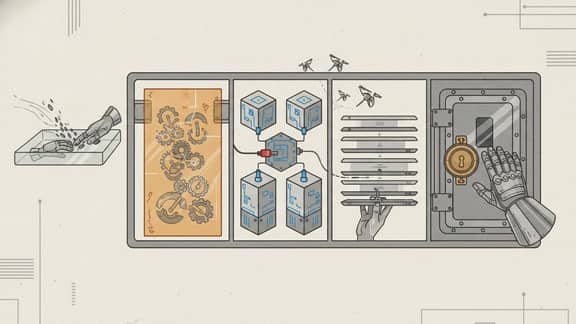
A Rippling replacement is a significant architecture decision because Rippling can connect employee data to HR, payroll, identity, applications and devices. The best alternative depends on which of those boundaries the organisation genuinely wants in one platform.
Rippling’s current product positioning is the primary reference for the incumbent capabilities discussed here.
What Rippling still does well
Rippling’s HR products use a unified employee data model across core HR, payroll, benefits, time, recruiting and talent, while the wider platform reaches IT and finance. That can make joiner, mover and leaver events unusually coherent.
Replace Rippling when its geographic coverage, commercial model, governance surface or all-in-one architecture conflicts with the target operating model. Do not move the employee record to repair a single approval queue.
Best Rippling alternatives
| Alternative | Best when | Main tradeoff |
|---|---|---|
| Deel | Global hiring, contractors, employer-of-record and multi-country payroll dominate | IT and device orchestration are not the centre of the proposition |
| HiBob | A distributed mid-market team wants configurable people operations and talent | Cross-functional identity and device automation may need separate tooling |
| BambooHR | Core HR usability for a growing organisation matters most | Complex global and IT requirements require additional systems |
| Workday | Enterprise HCM, planning, controls and scale justify a major programme | Implementation and ongoing administration are much heavier |
| Employment Hero | HR, payroll, workforce operations and employment services align in supported markets | Country-specific product availability must be validated |
Treat this as a systems-boundary comparison, not a checklist contest. Removing one platform can create several new integration owners.
Apps like Rippling by operating model
Test Rippling alternatives with one event that crosses teams: hire an employee, issue access and a device, enrol payroll and benefits, change their manager, then terminate access on time. Deel should prove global employment strength; HiBob and BambooHR should prove a narrower HRIS is enough; Workday should prove enterprise depth. Count the integration owners created by any replacement.
Free and open-source Rippling alternatives
A free Rippling alternative cannot honestly replace the combined HR, payroll, identity and device boundary. Free products may cover one component, while open-source components create several security, availability and integration responsibilities. The relevant cost is operating the joined lifecycle safely, not the absence of one subscription.
Rippling alternative for small business
For a small business, first ask whether payroll, HR and IT truly need one control plane. A payroll-led product or approachable HRIS can be easier to operate. Compare mandatory modules, per-worker costs, integrations, support and the cost of replacing device or identity automation.
When to keep Rippling
Keep Rippling when the unified employee model prevents joiner, mover and leaver gaps across HR and IT, and the organisation can govern that reach. A narrow usability complaint is a poor reason to recreate identity and device risk across disconnected tools.
Before replacing Rippling
Model dependencies before export: worker identity, legal entity, payroll, benefits, time, app access, devices, expenses, policies, workflows and audit history. Sequence the cutover so a worker cannot be active in payroll but orphaned in identity—or disabled in IT while still employed.
Rippling vs a focused custom workflow
If Rippling correctly owns employee and access events but a specialist approval or readiness workflow is missing, retain its authority. A focused operation can coordinate the exception, capture decisions and invoke supported actions while Rippling stays the lifecycle record.
Use Best HR software to compare the HR boundary, the employee onboarding workflow to test lifecycle orchestration, and the HR sprawl analysis to count new handoffs.
Choose a discovery route
If interviews, source material, record ownership, controls, or migration need structured review, explore Deep Discovery. It can investigate whether to keep, integrate, migrate, or own records without presuming replacement is safe. Deep Discovery is currently available through a limited account-enabled rollout.