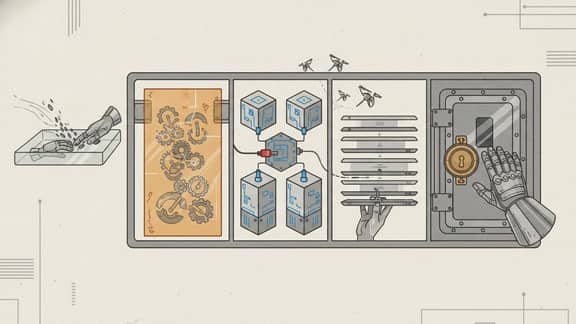
Forecast competitors become relevant when an organisation wants a different relationship between resource allocation, task delivery, capacity, utilisation, and project economics.
What Forecast still does well
Forecast's resource-management documentation covers people schedules, project or task allocation modes, hard and soft allocations, placeholders, capacity planning, and utilisation. Keep it when project scoping and delivery data make that joined plan credible.
Best Forecast competitors
| Alternative | Prefer it when | Main trade-off |
|---|---|---|
| Kantata | Enterprise PSA staffing and economics need more depth | Platform and implementation scope increase |
| Scoro | CRM, quoting, projects, time, billing, and margin should share a services suite | It changes more than resource planning |
| Float | A simpler visual schedule connected to other systems is enough | Task delivery and PSA context remain elsewhere |
| Runn | Tentative projects and capacity scenarios are the core job | Detailed execution may require another tool |
| Mosaic | Project timelines and member workload need a different planning view | Validate commercial and integration depth |
| A focused allocation operation | Forecast remains the delivery platform but allocation control is fragmented | Every commitment must reconcile safely |
Apps like Forecast: test delivery data
Use one project from scope to actuals. Change estimates, dates, allocations, leave, and task progress; inspect capacity, utilisation, margin implications, permissions, history, and failure handling. A planning model is only as reliable as its project and time data.
Free and open-source options can demonstrate scheduling, but the operator inherits authentication, hosting, upgrades, integrations, backups, audit, and support. For small business, a narrower scheduler may beat a PSA-style platform if commercial records already live elsewhere.
When to switch, keep, or focus the workflow
Switch when another product boundary fits delivery better. Keep Forecast when weak estimates or inconsistent actual-time entry are the real cause; a migration will carry those problems forward. A focused operation can keep Forecast and authoritative source systems while owning demand, capacity snapshots, proposals, approvals, commitments, exceptions, and reconciliation.
Before replacing Forecast
Inventory clients, pipeline assumptions, projects, scopes, tasks, estimates, allocations, placeholders, people, rates, time entries, budgets, invoices or finance exports, integrations, permissions, reports, and history. Prove the target can preserve the chosen project-versus-task allocation strategy. Parallel-run active and tentative work, reconcile capacity, utilisation, progress, and commercial outputs, then test a date change and retrospective correction. Define coexistence and rollback before disabling any system that still drives delivery or billing.
The practical decision
Choose Kantata or Scoro when the organisation deliberately wants a broader services platform. Choose Float, Runn, or Mosaic when existing project and commercial systems should remain and the planning layer should become narrower. Keep Forecast when its joined delivery model works and one local control is missing. The decision is not which interface looks easiest; it is which product boundary produces one maintainable plan without duplicating project truth.
Questions the shortlist must answer
Does capacity come from project allocations, task estimates, or both, and what happens when they disagree? How are tentative pipeline projects separated from committed delivery? Can utilisation and margin be reconstructed after a retrospective time correction? Ask each vendor to demonstrate those cases with the same sample project. A cleaner schedule is not an improvement if planners lose confidence in how delivery data produced it.
Use Best resource management software, the resource allocation workflow, and resource-planning sprawl to test the boundary.
Explore Deep Discovery
When projects, time, finance, CRM, and migration are coupled, Deep Discovery can map a safe keep, integrate, migrate, or own decision. It is currently a limited account-enabled rollout.